
Review · USA
Beginner Hang Gliding Lesson
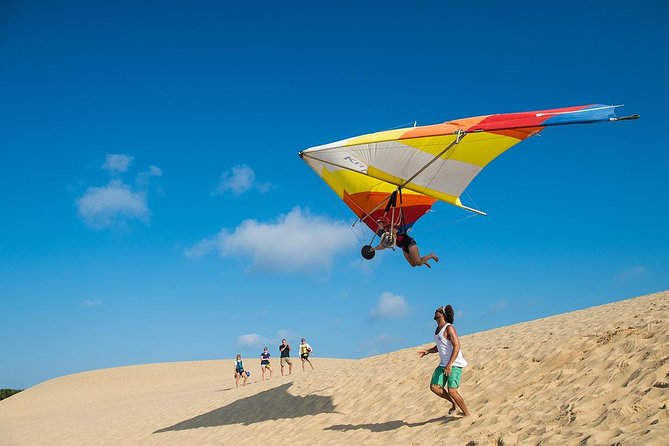
The most memorable part of this beginner hang gliding lesson is its setting: Jockey’s Ridge, near the place where the Wright Brothers first flew. You learn on broad sand dunes, launch a few feet above the ground, and return to the sand after each short flight. It is real hang gliding, but carefully scaled for first-timers.
I like the five training flights, since you get several chances to improve instead of putting all your hopes on one attempt. I also like the small class size, capped at three people, and the steady coaching from instructors such as Ben, Larson, Brad, Drake, and Megan. The main drawback is physical: walking uphill through loose sand and running for takeoff can be tiring, especially in hot sun or strong wind.
Key points to know before booking
- Five flights give you time to improve: Each attempt comes with fresh advice from the instructors.
- Jockey’s Ridge is part of the experience: Expect soft sand, steep dune walks, open sun, and fine views.
- This is low-level training, not a high-altitude flight: You remain close to the ground and are not free-soaring untethered.
- The lesson begins with 30 minutes of ground school: You learn the basic movements before handling the glider.
- A small class keeps instruction personal: No more than three people take part.
- Bring water and sun protection: Neither bottled water nor sun protection is provided.
Why Jockey’s Ridge makes a fitting classroom
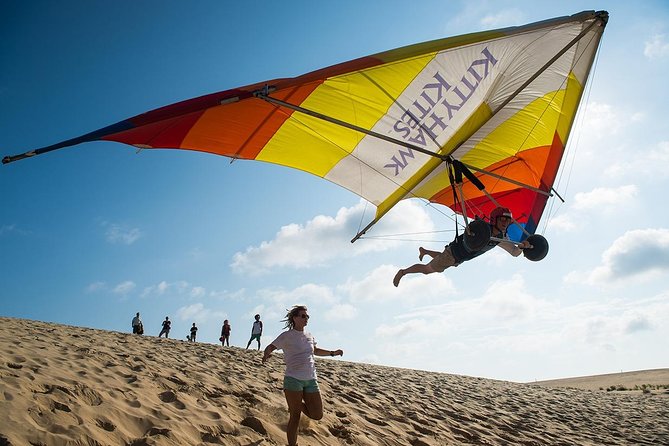
Jockey’s Ridge State Park gives this lesson a strong sense of place. You are not simply practicing an adventure sport at an indoor facility or on an anonymous field. You are learning to fly on the Outer Banks, near Kitty Hawk and the Wright Brothers’ first flight site.
The setting is also practical. The dunes provide soft sand for landings and plenty of room for beginner training. You will not be sent soaring far above the coast on your first attempt. This is a controlled introduction, with short flights close to the ground.
That lower height helps many beginners relax. It also explains one common surprise: you may expect long, high glides, but this lesson focuses on technique rather than distance. The experience is closer to learning how to launch, steer, and land than taking a scenic flight.
The view still matters. From the upper sand, you get a broad look over Jockey’s Ridge and the surrounding Outer Banks. On a clear day, the combination of wind, open sky, and pale sand makes even a short flight feel special.
More Hang Gliding in the world:
- Rio de Janeiro: Hang Gliding Adventure
★ 4.6 · 760 reviews - Rio de Janeiro: Hang Gliding Tandem Flight
★ 4.8 · 426 reviews - Rio de Janeiro: Hang Gliding or Paragliding Flights
★ 4.7 · 132 reviews
The first 30 minutes: ground school
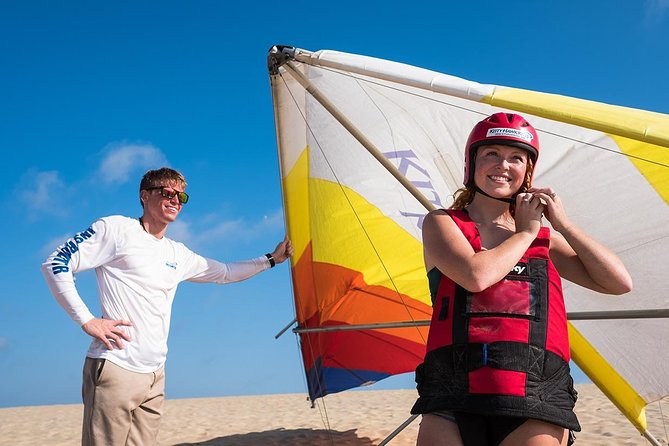
Your lesson starts at 300 W Carolista Drive in Nags Head. After check-in and waivers, you begin a 30-minute interactive ground class.
This is the part that turns the activity from a wild idea into a series of manageable steps. You learn how the equipment works, how to position your body, and how to respond to instructions during takeoff and landing. You do not need previous hang gliding experience.
Pay attention here. Several instructors use short, direct commands during the flight, and your job is to follow them without overthinking. One useful lesson from the experience is simple: listen, move when told, and keep trying after an imperfect attempt.
After class, you have a short break to use the bathroom, collect your belongings, and put on your gear. The school provides the hang glider, helmet, and harness. You carry the helmet and harness with you toward the dunes.
Walking out to the dunes
The walk to the training area is part of the workout. The route includes a boardwalk, then soft sand and uphill sections. The sand can shift under your feet, and climbing a dune takes more effort than walking on a flat path.
You may also need to climb back up between flights. The hill can feel steep, particularly in hot weather or if you are not used to walking on sand. One participant even pulled a hamstring after a single flight, so warming up and staying loose is sensible.
You should be able to walk across the dunes and run during takeoff. The activity has a 235-pound weight limit. Most people can take part, but this is not a seated sightseeing ride. A basic level of mobility and comfort with short runs will make the lesson far more enjoyable.
Wear practical clothing and footwear suited to sand. You will eventually remove your shoes in the dune area, according to the experience details, so expect sand on your feet and in your belongings. Bring water, a quick snack, sunscreen, and other sun protection. There is little or no shade on top of the dunes, and the heat can become uncomfortable.
Five training flights over roughly two hours
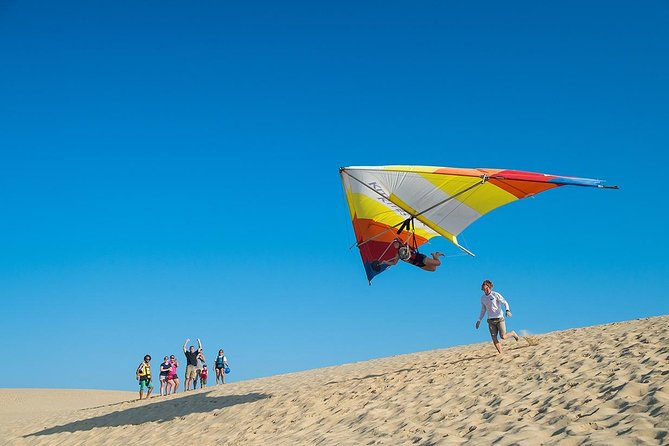
The flight portion lasts about two hours. Each person receives five training flights, with the instructors helping you prepare, launch, and recover between attempts.
Your first flight is mainly about getting the basic movement right. You may feel awkward at first. That is normal. The harness can feel more comfortable than you expect, and the soft sand makes the landing less intimidating.
After each flight, the instructor gives you practical advice for the next one. You may work on your running speed, body position, steering, or landing technique. This repeated coaching is one of the strongest reasons to choose the lesson instead of a single introductory flight.
By the third, fourth, or fifth attempt, you may feel a clear change. Your movements become less hesitant, and you start to understand how small adjustments affect the glider. Some people fly successfully on every attempt. Others have a rough landing or follow an instruction too late. The sand is forgiving, and the instructors keep the mood light while remaining attentive.
Do not judge the experience by height alone. These flights are designed to keep you near the ground. One person expecting long, untethered glides found the activity more limited than expected, but still enjoyed the dunes and the friendly instruction. If you want a high-altitude scenic flight, this may not match your idea of hang gliding. If you want to learn the basics in a controlled setting, the format makes sense.
Same sky, a different way up:
- Paragliding Oludeniz – Fethiye, Turkey
★ 5.0 · 2,128 reviews - Interlaken: Tandem Paragliding Flight with Pilot
★ 4.9 · 2,117 reviews - Oludeniz Paragliding Fethiye Turkey, Additional Features
★ 5.0 · 1,813 reviews - Cape Town: Tandem Paragliding Adventure
★ 4.7 · 1,693 reviews
The instructors make the difference
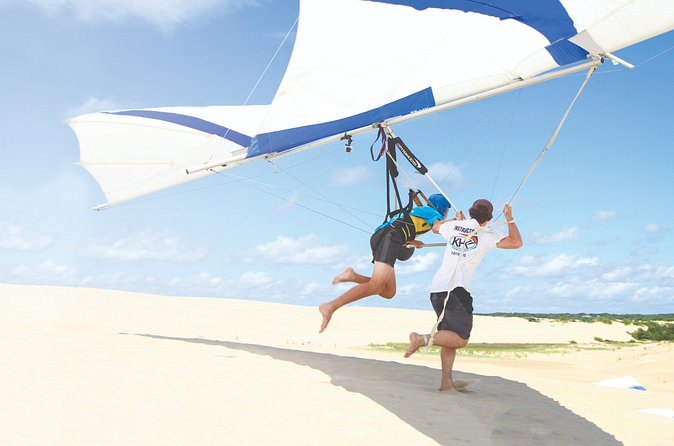
The strongest feature of this lesson is the teaching. Names associated with the sessions include Ben, Legs, Larson, Brad, Drake, Michael, Josh, Rich, Megan, Cooper, Branden, David, Jude, Alex, Oliver, and Alise.
You may not have any one particular instructor, but the pattern is clear: expect an active teaching style rather than a hands-off rental. Instructors give directions during the flight, watch your progress, and suggest changes before the next attempt.
That matters if you arrive nervous. One couple found that Drake helped them feel comfortable, while other students praised the patience and humor of Michael and Josh. Rich and Megan were also singled out for making the activity feel fun and approachable.
The class size helps. With a maximum of three people, the instructors can give each person repeated attention. You are not lost in a large group waiting all afternoon for a turn.
This setup also works well for families. The activity has been completed by people ranging from age 13 to adults in their 60s. A 17-year-old once had a lesson with only one participant, allowing for especially focused instruction. The key is not athletic talent so much as listening, trying again, and being willing to run.
Weather controls the whole day
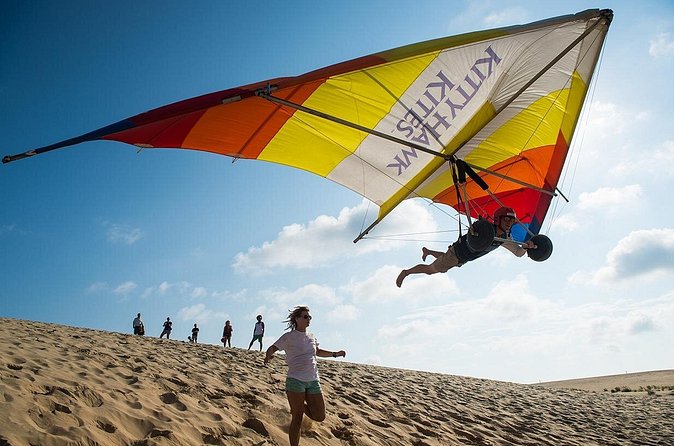
Hang gliding depends on wind, so weather can change your plans. A session may be rescheduled or canceled if conditions are too windy or otherwise unsuitable.
That is not a minor detail. One morning session was moved to the afternoon because the wind was too strong. Another lesson was canceled for the day, with the school offering a new date or a full refund. In one case, the instructors provided several rescheduling options before the participant had to leave the Outer Banks.
You should avoid placing this activity on the final morning of a short trip. Give yourself room to move the lesson if conditions change. Booking around 22 days ahead is common, so popular dates may require planning, but weather still has the final say.
Wind can also shift during the lesson. One family got to fly even after conditions changed, while the staff kept a close eye on safety. If the wind becomes unsuitable, the instructors may shorten or stop the session. That can be disappointing, but it is the correct call for a sport that relies on air movement.
Is $149 a fair price?
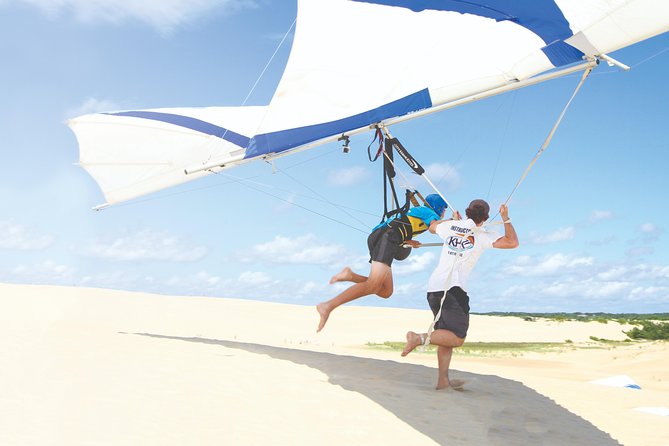
The price is $149 per person for about three hours. That includes the glider, helmet, harness, ground instruction, and five training flights.
For an introductory activity, the value comes from the amount of instruction and equipment time. You are not paying for one quick ride. You receive a class, a walk into the dunes, repeated attempts, correction after each attempt, and a wrap-up at the end.
The small class size also improves the value. A cheaper large-group lesson could leave you waiting between turns, while this session limits participation to three people. If all five flights run as planned, you get a proper first lesson rather than a brief sample.
Still, the price is easier to justify if you care about learning. If you mainly want a long, graceful glide with wide coastal views, the short, low flights may feel limited. Read the experience for what it is: a beginner course with five practice runs, not a tandem sightseeing flight.
Water and sun protection cost extra because they are not included. Bring your own to avoid an uncomfortable wait on the dunes.
Who should book this lesson?
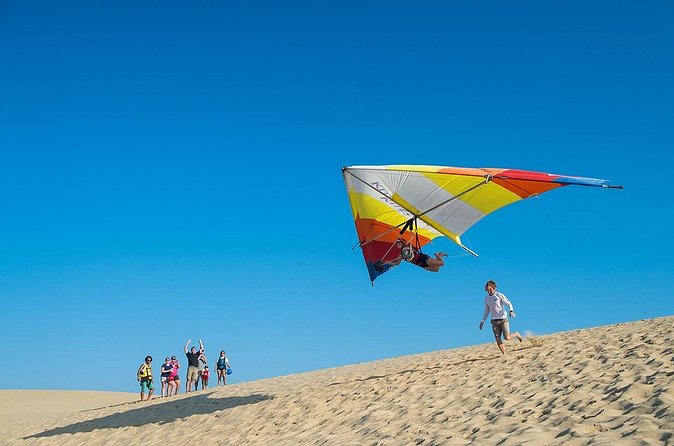
I would recommend it to families with teens, active couples, friends looking for something beyond the beach, and solo visitors who want a memorable Outer Banks activity. It also suits people who have always wanted to try hang gliding but do not want to begin with a high, long flight.
The lesson can work for older adults too, provided you can manage the dune walk and the running required for launch. Age alone is not the issue. Strength, balance, and comfort with soft sand matter more.
You may want to skip it if you have limited mobility, cannot run safely, or dislike strong sun and exposed dunes. The school allows service animals, and most people can participate, but the 235-pound limit applies.
It is also not ideal for anyone seeking a calm, passive outing. You will carry gear, walk uphill, run, repeat instructions, and climb back up for the next attempt. The effort is part of the activity.
What happens at the end
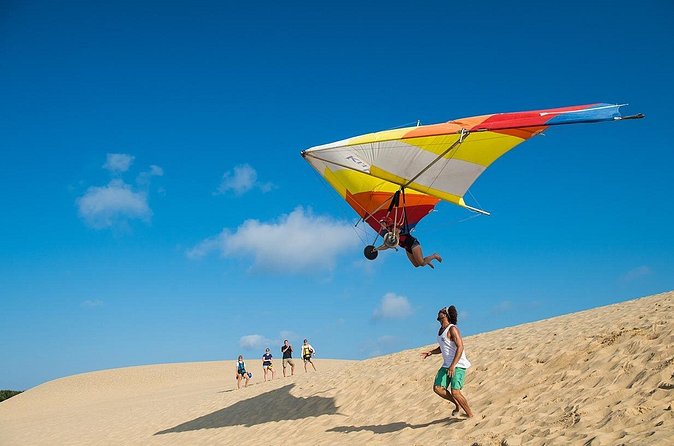
After the final flight, the group returns to the hang gliding school. The instructors review what you learned and help close out the lesson.
The return walk gives you time to cool down and think about the progress between your first and fifth attempt. Some participants receive an I Flew badge and a hang gliding pass as a small reminder of the day.
The activity ends back at the original meeting point. Plan on about three hours from start to finish, though wind and group pace can affect the timing.
Practical tips for a smoother flight
- Warm up before arriving: Stretch your legs, particularly your hamstrings, before running on sand.
- Pack water: You will be outside, walking uphill, and flying in full sun.
- Use sun protection: Bring sunscreen, a hat, or other protection because the dune tops have little shade.
- Leave room in your schedule: Weather can force a new time or date.
- Listen instead of overthinking: The instructors give real-time directions for a reason.
- Expect sand everywhere: Wear clothing and footwear that can handle it.
- Do not compare it with a high scenic flight: The training flights stay low and focus on basic control.
- Treat the first flight as practice: The fifth attempt may feel very different from the first.
Should you book the Jockey’s Ridge lesson?
Book it if you want a hands-on first taste of hang gliding, value patient instruction, and do not mind working for your flight. The five attempts, small group, soft-sand landings, and historic Outer Banks setting make $149 reasonable for an active three-hour lesson.
Skip it if you want to soar high and far without running, walking dunes, or adjusting plans around weather. For most curious beginners, though, this is a thoughtful way to try hang gliding without jumping straight into a larger flight. Put it early enough in your trip to allow for wind delays, bring water, and arrive ready to listen.
FAQ
Where does the beginner hang gliding lesson take place?
The lesson takes place at Jockey’s Ridge State Park in the Outer Banks. You meet at 300 W Carolista Drive, Nags Head, North Carolina, and return there at the end.
How many flights do I receive?
Each person receives five training flights during the flight portion of the lesson, which lasts about two hours.
How long does the full experience last?
The activity lasts approximately three hours. It includes 30 minutes of ground school, time to gear up, the walk to the dunes, five flights, and a final review.
What equipment is included?
The hang glider, helmet, and harness are included. Bottled water and sun protection are not included.
Is there a weight limit?
Yes. The weight limit is 235 pounds.
What happens if the weather is poor?
The experience requires good weather. If it is canceled because of poor conditions, you can receive a different date or a full refund. You can also cancel for a full refund if you cancel at least 24 hours before the scheduled start time.
Latest flights added around the world
- Lefkada paragliding tandem flighs/ Kathisma beach★ 5.0 · 9 reviews
- Taormina: Paragliding Tour with Instructor and GoPro Video★ 5.0 · 6 reviews
- Kärnten/Villach: Tandem Paragliding Flight★ 5.0 · 4 reviews
- Lanzarote Hang Gliding Tandem Flights★ 4.0 · 5 reviews
- Kathmandu Paragliding : Elevate Your Adventure★ 5.0 · 2 reviews
- Jakarta: Paragliding on Top Mountain & Tea Plantation★ 5.0 · 3 reviews
- Guatape: Paragliding Experience★ 4.8 · 6 reviews
- Kemer: Paragliding with Hotel Transfer & Cable Car★ 5.0 · 6 reviews
USA Paragliding, compared.
Paraglide Maui’s 1K Tandem Paragliding Experience
Our verdict on this flight →
Los Angeles: 30-Minute Tandem Paragliding Experience
Our verdict on this flight →
Tandem Paragliding flight with instructor in Malibu
Our verdict on this flight →
Malibu Hills to Beach: Tandem Paragliding Flight Adventure
Our verdict on this flight →
Grandy Tandem Hang Gliding 2000′ – Outer Banks
Our verdict on this flight →Browse the lists this tour appears in