
Review · PERU
Cusco: Tandem Paragliding in The Sacred Valley of The Incas
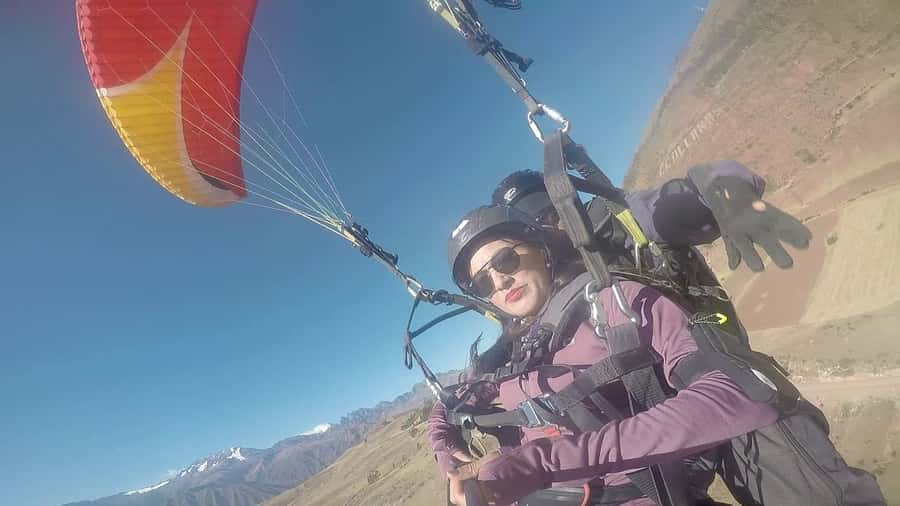
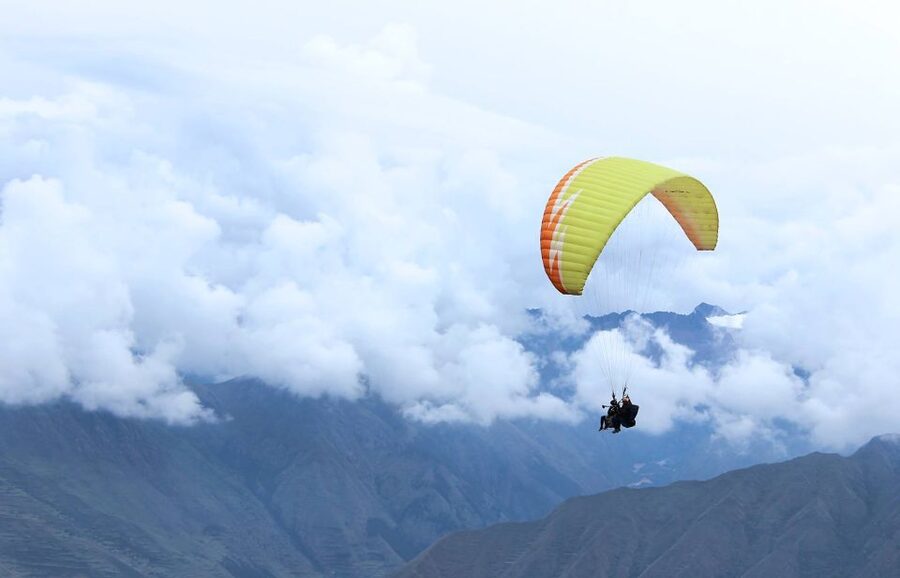
The best part of this Sacred Valley paragliding flight is the setting. From Cerro Sacro, at 3,880 meters, you look across Inca ruins, patchwork fields, small settlements, forested slopes, and distant glacial peaks before running forward into the wind. The flight itself usually lasts 10 to 20 minutes, though good thermals can keep you aloft longer.
I like two things here: the pilots take time to wait for safer wind, and the included video means you do not have to choose between enjoying the view and handling a camera. Pilots such as Leo, Simon, Carlos, Andy, and José have helped make this a reassuring first flight for many people. The main drawback is that weather controls the day. You may wait in the cold, fly from another mountain, or lose the flight if wind, rain, or turbulence makes conditions unsafe.
Key points to know before booking
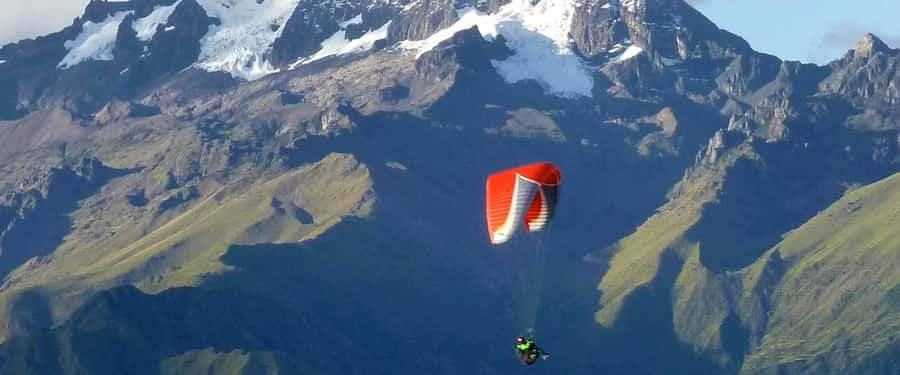
- Cerro Sacro gives you a high launch point: The mountain rises to 3,880 meters, with a steep slope and a 600-meter vertical drop.
- The flight is suitable for first-timers: You fly tandem with a professional pilot, using a licensed harness and helmet after a safety briefing.
- Wind sets the timetable: Waiting is normal, and the pilot can delay or cancel a flight if conditions become unstable.
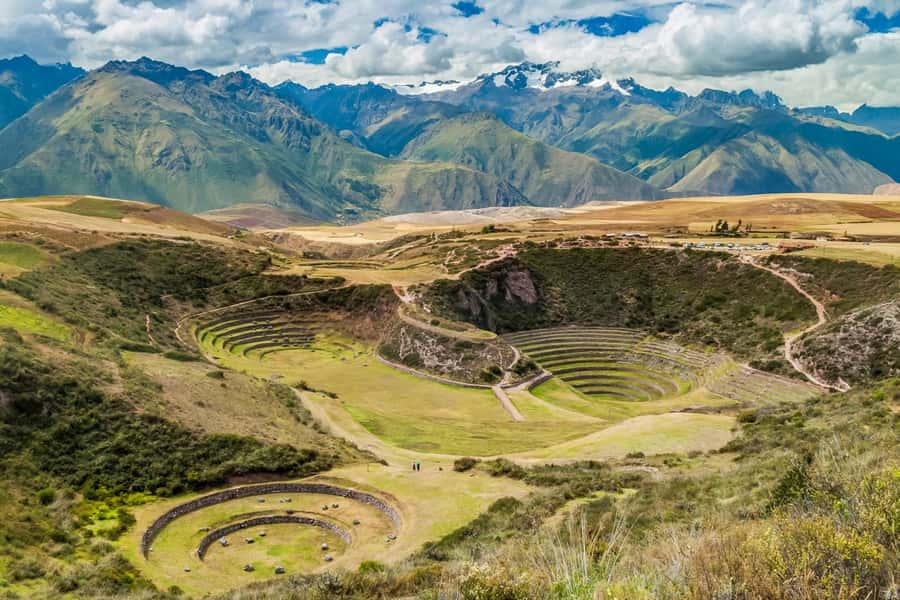
- The scenery is unusually varied: Look for Inca ruins, farms, villages, hills, and snowy or glacial peaks around the Sacred Valley.
- The day is mostly transport and preparation: Plan on six to seven hours from pickup to drop-off, with only part of that time in the air.
- The weight rules are firm: Participants must weigh more than 40 kilograms and less than 91 kilograms, with special permission required for children over 40 kilograms.
Why fly over the Sacred Valley from Cerro Sacro?
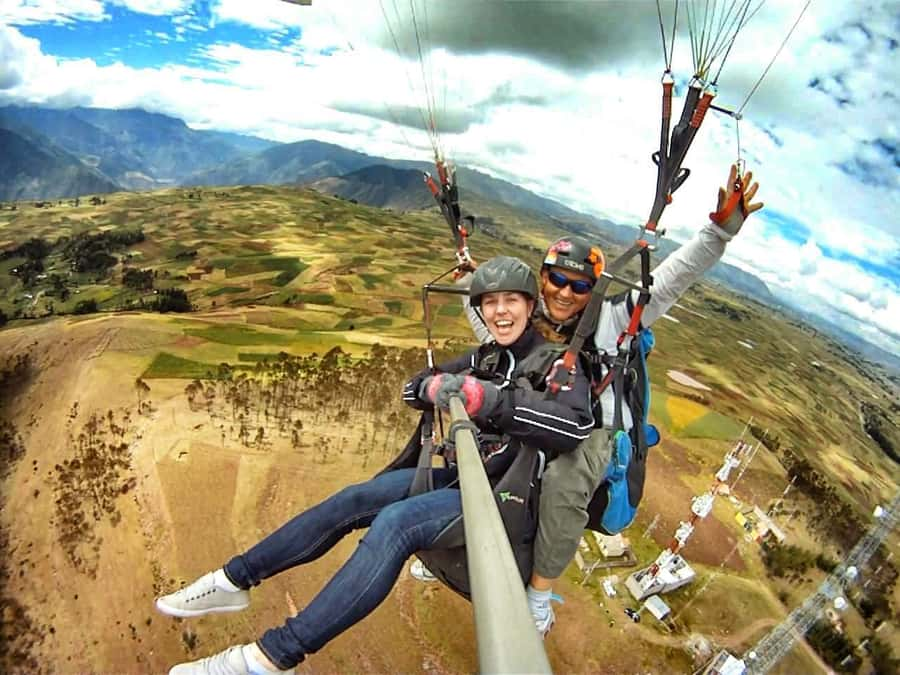
Paragliding here is not simply a quick thrill above a scenic valley. The launch point gives you a broad view of the Sacred Valley, with the Andes rising around a long, settled corridor below.
Cerro Sacro reaches about 3,880 meters, or 12,730 feet. Its slope is listed at 70 degrees or more, with a vertical drop of roughly 600 meters. Those figures explain why the site works well for tandem flights: you have a steep launch area and open air below, rather than a cramped takeoff beside buildings or trees.
From above, the valley’s details come together. You may see cultivated fields, small communities, forested hillsides, Inca ruins, and high peaks that frame the view. One particularly memorable detail from a flight is the sight of birds of prey circling near the paraglider. You are not promised that exact encounter, but the broad views are the reason to choose this activity over a standard road trip through the valley.
The altitude also affects how you should prepare. Even if the day feels mild in Cusco, Cerro Sacro can be cold, especially while you wait for the wind. Bring the jacket and gloves listed for the activity, along with a hat and sunscreen. High-altitude sunlight can be strong, and your flight may involve a long period of standing around before takeoff.
More Tandem Paragliding in the world:
- Interlaken: Tandem Paragliding Flight with Pilot
★ 4.9 · 2,117 reviews - Cape Town: Tandem Paragliding Adventure
★ 4.7 · 1,693 reviews - Tandem Paragliding Experience from Interlaken
★ 5.0 · 1,655 reviews
What the six to seven hour day looks like
The experience begins with pickup from a hotel in Cusco’s Historic Center or from selected Sacred Valley towns and hotels. In the valley, pickup is available in Ollantaytambo, Yucay, and Urubamba, depending on the option you reserve.
Allow extra patience for the meeting point. Narrow streets can prevent a vehicle from reaching the door of your hotel, and a private apartment or address outside the route may require you to walk to the closest practical pickup point. Confirm the exact location and time before the day begins. Communication has generally been handled by phone or WhatsApp, but one area that can be less smooth is app communication, so do not rely only on a last-minute notification.
The drive is part of the outing. You first travel toward the flight area, then may transfer into a four-wheel-drive vehicle for the climb to the launch point. One detailed account described the final uphill drive as roughly 1,000 meters higher than the landing area. The exact route can change, but you should expect mountain roads and a high launch site rather than a simple roadside departure.
At the flight point, the team explains the process, checks the equipment, and gives safety instructions. Your pilot fits you with a helmet and harness and explains how to take off. The briefing is short, but it matters. Pay attention to how to move when instructed, how to position your legs, and what to do during landing.
The small group size, limited to six participants, helps keep the setup manageable. It does not mean everyone flies at the same instant. Wind can change between flights, so one person may wait while another takes off. This is one reason the full outing lasts much longer than the time you spend in the air.
Takeoff, flight time, and landing
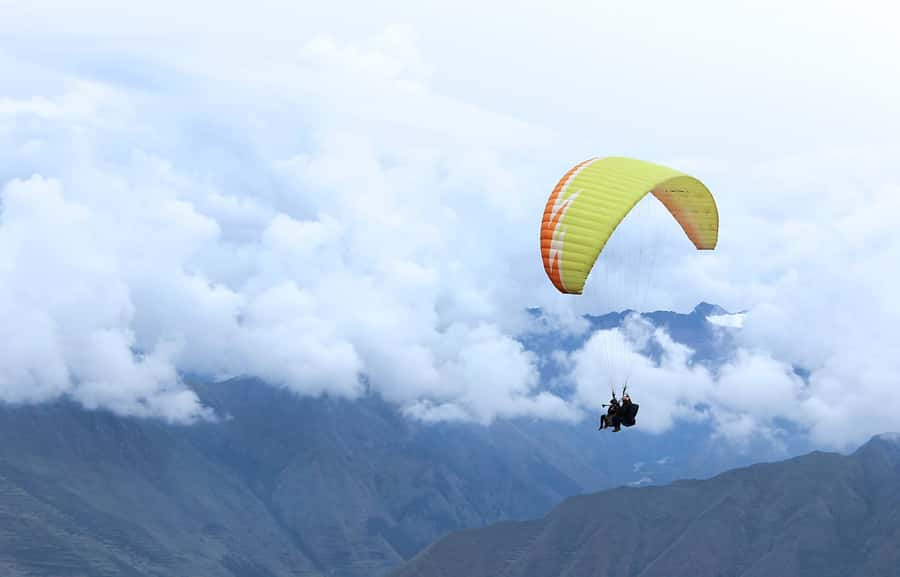
The flight is advertised in slightly different ways, with a usual range of 10 to 20 minutes. The included details list 10 to 15 minutes, while the main description gives 15 to 20 minutes. Wind conditions decide the actual length, and strong thermals can extend the flight.
Takeoff is the moment most first-timers worry about. You are attached to the pilot, not flying the paraglider alone. The pilot controls the canopy and gives you clear instructions. Some people find the first few seconds more exciting than frightening, while others need extra reassurance. Leo is repeatedly praised for calming nervous passengers, and one person described using breathing exercises before takeoff.
Once airborne, the experience can be calmer than expected. You sit in the harness and look out over the valley while the pilot handles the flight. At times, the ride can feel like a roller coaster, particularly when the pilot circles or catches a thermal. That sensation is worth knowing about if you dislike sudden changes in movement.
The pilots may work to find rising air, which can carry you higher than the launch point and extend the flight. This is not guaranteed. If the wind weakens, your time in the air may be shorter. The pilots’ decision to wait for suitable conditions is a positive safety measure, but it can make the schedule less predictable.
Landing is usually made with the pilot’s instructions. You may touch down seated or on your bottom, rather than landing upright. A spiral near the end has been part of some flights, although the exact approach depends on conditions and the pilot. Expect a controlled landing, but do not treat it as a completely still glide.
The pilots and the human side of the experience
The most strongly praised part of this outing is the pilot team. Leo is the most frequently named guide, and he is described as an early promoter of paragliding in Peru with decades of experience. His role may vary between flying directly with you and coordinating another pilot, such as Carlos.
Simon is another pilot associated with the experience. He is described as friendly, clear in his explanations, and willing to wait for better wind rather than rush the takeoff. Andy and José have also led flights, and Carlos is noted for adding information about local nature and Peruvian culture.
That variety matters. You are not booking a self-guided activity where the equipment simply gets handed over. The pilot is responsible for the flight, the timing, the takeoff, and the landing. A calm voice makes a real difference when you are clipped into a canopy at a high mountain launch point.
Some pilots also add small cultural stops after the flight. Depending on the day, you might visit a local house, see a traditional weaving demonstration, enjoy chicha in a nearby village, or stop for photos with llamas and alpacas. These extras are not the core promise, so I would treat them as pleasant additions rather than reasons to book. They can make the drive back feel less like a transfer and more like a glimpse of local life.
English and Spanish are available. If you are nervous, tell the operator when booking and again at the launch site. The listed languages make basic communication possible, but the quality of your briefing still depends on the individual pilot and the day’s conditions.
More Paragliding around the world:
- Paragliding Oludeniz – Fethiye, Turkey
★ 5.0 · 2,128 reviews - Oludeniz Paragliding Fethiye Turkey, Additional Features
★ 5.0 · 1,813 reviews - Alanya: Tandem Paragliding with Hotel Pickup
★ 4.7 · 1,371 reviews - From Medellín: Paragliding Tour with GoPro Photos & Videos
★ 4.9 · 1,210 reviews
Photos and video from the air
A video of your flight is included, which is useful because taking your own phone out while airborne can distract from the experience. The video lets you remember the takeoff, the valley, and the canopy from a better angle than a handheld phone usually provides.
You should still bring your phone if you want additional ground photos, but do not assume you can use it freely during the flight. Ask the pilot about any camera rules before takeoff. The most important part is to keep your hands and attention available when the pilot gives instructions.
The views are the real souvenir. From the air, the Sacred Valley shows its scale in a way that is hard to grasp from the road. Fields and homes become small patterns, while the steep slopes and high peaks make the valley feel enclosed by the Andes.
Price, transport, and what the $120 covers
At $120 per person, this is not a cheap add-on, but it includes more than the flight alone. Hotel pickup and drop-off, transport to the flight area, the professional pilot, safety equipment, the briefing, and a flight video are included. For a visitor without a car, the transport is a major part of the value.
The price makes the most sense if you are already planning time in Cusco or the Sacred Valley and want one substantial outdoor activity. You are paying for the pilot’s judgment as much as for the airtime. Waiting for the right wind, checking the launch, and deciding when not to fly are central parts of a safe tandem experience.
Food and drinks are not included. Bring water and a snack, especially since the day can run six to seven hours and weather delays may extend the wait. Do not expect a full sightseeing tour with meals included. This is primarily a flight outing with transport and possible local stops.
If weather cancels the flight, the conditions state that passengers may have to pay transport costs. That is an important point to understand before booking. A cancellation may be the correct safety decision, but it can still leave you with an expense and an open block of time.
Free cancellation is available up to 24 hours in advance, and you can reserve now and pay later. Those policies help with planning, but they do not remove the weather risk on the day itself.
Weather, clothing, and practical limits
Weather is the main variable. High winds, turbulence, rain, or unstable conditions can cause the pilot to delay or cancel. Sometimes the team waits for a better window, and sometimes the flight moves to another mountain if Cerro Sacro is not suitable.
This means you should not schedule the flight immediately before an important train departure or airport connection. Leave room for delays. The six to seven hour duration is an estimate, not a guarantee that every stage will move on a fixed timetable.
Wear warm layers. A jacket and gloves are specifically recommended, and one person found the mountain very cold. Add sunscreen and a hat, but make sure anything loose is secure. You will spend time outside at altitude before takeoff.
The activity is not suitable for people with mobility impairments. Participants must weigh under 91 kilograms, or 200 pounds, and children must weigh more than 40 kilograms, or 88 pounds. Children over that minimum need permission from a parent or guardian. These limits are safety requirements, not suggestions.
Who should book this Sacred Valley flight?
I would recommend it most strongly to first-time paragliders who want a dramatic setting without having to operate the equipment themselves. You get a professional pilot, a short briefing, a small group, and a flight that is long enough to feel like a real experience rather than a quick amusement ride.
It also suits active couples, families with older children who meet the weight rule, and visitors who have already seen the Sacred Valley from roads and archaeological sites. The view from above gives you a different sense of the valley’s shape and scale.
You should think twice if you need a fixed start and finish time, dislike cold mountain waits, or are uncomfortable with motion and height. The flight can include turns, thermals, and a more energetic landing than a simple scenic ride. If your schedule is tight, weather uncertainty is the biggest concern.
Should you book it?
Book this if you want a memorable view of the Sacred Valley and can give the day room to breathe. The combination of experienced pilots, included video, hotel transport, and a high mountain launch makes the $120 price reasonable for a one-time adventure.
I would choose a day with flexibility and dress more warmly than you think necessary. Ask who your pilot will be, confirm pickup details, and accept that waiting is part of the safety process. If the wind cooperates, you may get a quiet glide over Inca country, a burst of roller-coaster movement, and a view you cannot get from the valley floor.
FAQ
How long does the paragliding experience take?
The full activity lasts about six to seven hours, including pickup, transport, preparation, waiting, the flight, and drop-off.
How long is the actual flight?
The flight is generally listed as lasting 10 to 20 minutes. The exact time depends on wind conditions, and it may be longer if the pilot finds useful thermals.
Where does the flight take place?
The planned flight site is Cerro Sacro in the Sacred Valley of the Incas. The mountain is about 3,880 meters high and has a vertical drop of around 600 meters.
Is paragliding experience required?
No. You fly in tandem with a professional instructor and receive safety instructions before takeoff. The pilot controls the paraglider.
What equipment is provided?
The activity includes licensed safety equipment, a harness, and a helmet. A video from your flight is also included.
Is hotel pickup available?
Pickup is available from hotels in Cusco’s Historic Center and from selected Sacred Valley locations, including Ollantaytambo, Yucay, and Urubamba. If a vehicle cannot reach your street, you receive a nearby meeting point.
What happens if the weather is bad?
The pilot may wait, move the flight to another mountain, or cancel if there is high wind, turbulence, rain, or other unsafe weather. If the flight is canceled for weather, passengers may need to pay transport costs.
What weight and age limits apply?
Participants must weigh under 91 kilograms, or 200 pounds, and over 40 kilograms, or 88 pounds. Children over 40 kilograms may fly with permission from a parent or guardian.
Latest flights added around the world
- Lefkada paragliding tandem flighs/ Kathisma beach★ 5.0 · 9 reviews
- Taormina: Paragliding Tour with Instructor and GoPro Video★ 5.0 · 6 reviews
- Kärnten/Villach: Tandem Paragliding Flight★ 5.0 · 4 reviews
- Lanzarote Hang Gliding Tandem Flights★ 4.0 · 5 reviews
- Kathmandu Paragliding : Elevate Your Adventure★ 5.0 · 2 reviews
- Jakarta: Paragliding on Top Mountain & Tea Plantation★ 5.0 · 3 reviews
- Guatape: Paragliding Experience★ 4.8 · 6 reviews
- Kemer: Paragliding with Hotel Transfer & Cable Car★ 5.0 · 6 reviews
Peru Paragliding, compared.
Lima: Paragliding Flight Over Costa Verde Districts
Our verdict on this flight →
Paragliding Flight at Paracas National Reservation
Our verdict on this flight →
Browse the lists this tour appears in